What We Like
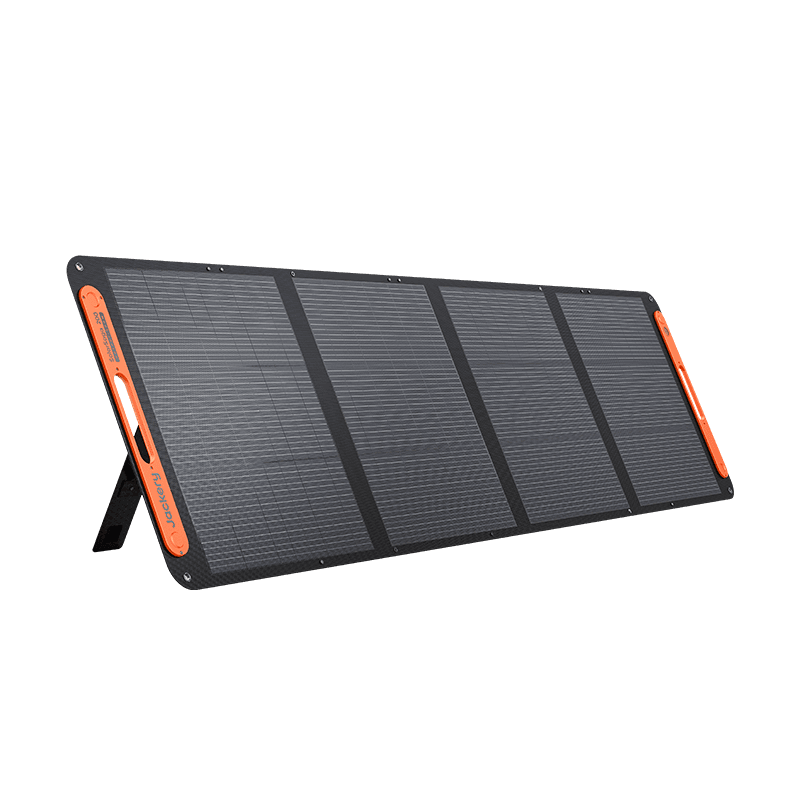
The SolarSaga 200W earns its keep by solving a very specific homeowner problem well: how to add solar charging to a portable power setup without stepping into a permanent install. The foldable format is genuinely useful, not a gimmick. It stores more cleanly in a garage, SUV, or utility closet than rigid panels, and the setup routine is simple enough that you are more likely to actually use it when an outage, camping trip, or road trip shows up. That convenience matters because backup gear people avoid setting up often becomes expensive clutter instead of a practical part of the home-energy toolkit.
Jackery also benefits from a strong mainstream ecosystem. Buyers can pair this panel with the company's own power stations or, with compatible connectors and voltage requirements, use it with other brands. That flexibility expands its usefulness beyond one-brand households. For homeowners who want a lightweight solar panel they can deploy on a patio, driveway, campsite, or cabin deck, the SolarSaga 200W feels purpose-built in a way many generic folding panels do not.
The build quality is another strength. The panel is designed for repeated setup and teardown, with a rugged outer shell and carrying-friendly format that suits travel, overlanding, and emergency storage. If your use case is portable backup rather than permanent rooftop production, that emphasis on mobility is a real benefit, not just a nice extra.
What Could Be Better
As with nearly every portable panel in this class, the headline 200W rating is aspirational. In perfect conditions with ideal sun angle, you can get close, but many homeowners should expect something more like 100W to 160W during normal use. Cloud cover, seasonal sun angle, partial shade, and even a less-than-ideal panel tilt can reduce output quickly. That does not make the panel bad, but it does mean buyers expecting a steady 200W all day may walk away disappointed if they have not used portable solar before.
The other big limitation is use-case fit. This is not a rooftop product and it is not a substitute for an installed home solar array. If your real goal is lowering utility bills through daily production, a folding panel is the wrong tool. The SolarSaga 200W is best understood as a complementary product for charging a power station, not a meaningful path to whole-home solar economics.
Price is also worth mentioning. Portable folding panels often cost more per watt than fixed rigid panels because you are paying for portability, hinges, integrated stands, and travel-friendly design. If you do not need that mobility, a less expensive rigid-panel setup may offer better pure value per watt.
Who Is This Best For?
The strongest fit is a homeowner who already owns a portable power station or is planning to buy one soon. In that situation, the SolarSaga 200W gives you a no-installation way to recharge during outages, road trips, tailgates, camping weekends, or off-grid work. It is especially appealing if you want backup power without fuel storage, generator noise, or the complexity of wiring solar hardware into your home.
It is also a strong option for buyers who value flexibility over maximum efficiency. A foldable panel can move with you, serve multiple properties, and stay useful even if you are renting, between homes, or still deciding whether a larger solar investment makes sense. That adaptability lowers the commitment level compared with a roof-mounted solution.
Where it is less compelling is for homeowners trying to build a budget solar setup from scratch or offset a meaningful portion of their electric bill. In those cases, a portable panel can feel overpriced relative to what it actually produces. The right buyer is someone prioritizing convenient solar charging for backup gear, not someone trying to mimic a full solar installation.
Performance & Efficiency
In practical use, the SolarSaga 200W should be evaluated on realistic rather than rated output. Under good midday sunlight with careful angling, getting into the 140W to 160W range is a reasonable expectation. Under mixed conditions, flatter placement, or intermittent clouds, output can fall closer to 100W to 130W. That difference matters because it changes whether you are doing a full-day recharge, a substantial top-up, or just slowing the rate at which a connected power station is being drained.
For a mid-size power station in the 1kWh to 2kWh range, a panel like this can add meaningful energy over the course of a day, especially if you reposition it occasionally to keep a better sun angle. It is not unusual for portable solar owners to underestimate how much panel angle matters. A small adjustment can materially improve daily harvest compared with simply setting the panel down once and forgetting it.
Efficiency here is less about laboratory conversion numbers and more about system practicality. A panel that is easier to deploy, angle, move, and store often delivers more real-world value than a theoretically cheaper option that is awkward enough to stay folded in the garage. In that sense, the SolarSaga 200W performs well because it lowers the friction between owning solar hardware and actually using it.
Value for Money
At roughly $499 to $599, the SolarSaga 200W is not the cheapest way to buy solar wattage, but it can still make financial sense for the right household. If the alternative is fueling and maintaining a generator just to keep a portable battery topped up for occasional outages, the convenience, silence, and low ongoing cost of solar charging are appealing. Over time, the panel can support outage prep, travel, and off-grid use without recurring fuel purchases.
The key is understanding that this is a complementary purchase to a power station, not a standalone power solution. If you already have a power station, the panel expands what that battery can do. If you do not, buying the panel alone does not solve much. The value proposition is strongest when you want to extend the usefulness of a battery platform you already own or plan to buy.
Compared with the Bluetti PV200 and similar 200W folding panels, Jackery often asks a small premium for brand familiarity, accessories, and ecosystem confidence. Some buyers will find that worth it. Others will prefer a lower-cost rival with similar field performance. Either way, the SolarSaga 200W is easy to justify when portability and convenience are more important than squeezing every last dollar out of price-per-watt math.