What We Like
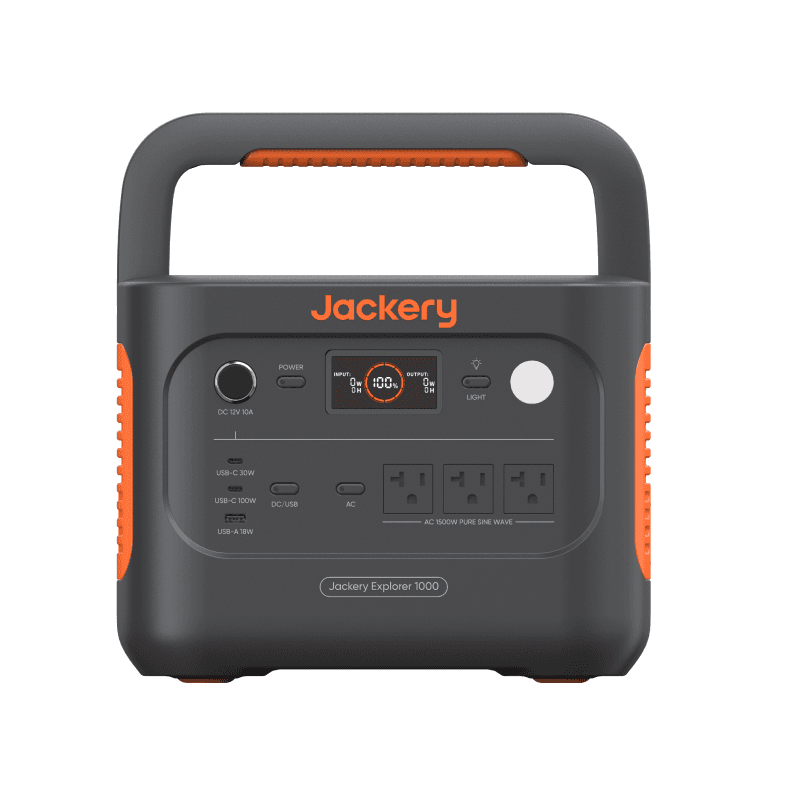
The Explorer 1000 v2 makes its case by giving homeowners more of the two things that usually matter most in a portable power station: capacity and usable output. Moving from sub-800Wh models into the roughly 1kWh range creates a noticeable jump in practical runtime for refrigerators, lights, routers, and device charging. That extra headroom can be the difference between a battery station that feels helpful and one that feels like a partial solution.
LFP battery chemistry is a major plus. For buyers who expect to use the station regularly, not just during rare emergencies, longer cycle life improves the ownership story over time. This matters for households that want to integrate the power station into camping, RV, outdoor work, or everyday resilience rather than leaving it untouched for months. The longer useful life can make the higher upfront cost easier to justify.
Jackery also benefits from ecosystem depth. Accessories, compatible solar panels, and general brand familiarity are all stronger than with many smaller competitors. That can reduce friction for buyers who want a known quantity rather than spending time researching every adapter, cable, and panel pairing from scratch.
What Could Be Better
The most obvious tradeoff is price. Once you move toward the $799 to $999 band, you are no longer in impulse-purchase territory. Buyers need to be clear about whether their expected outage duration, appliance mix, and frequency of use truly justify the step up over less expensive mid-tier options like the Anker SOLIX C800.
It is also still important not to confuse a strong portable power station with a whole-home backup system. The 1500W output is useful and meaningfully broader than many smaller units, but it is not a blank check to run every high-draw appliance in the house. Microwaves, space heaters, coffee makers, and some other heavier loads become possible, but they also drain a 1,070Wh battery surprisingly quickly.
Finally, the higher capability can tempt buyers into overestimating runtime. Capacity and output improve together here, but energy use from larger appliances rises just as fast. A station that can run a demanding device is not necessarily a station that can run it for long.
Who Is This Best For?
The Explorer 1000 v2 is best for homeowners who already know entry-level stations feel too limited for their needs. If you want more headroom for longer outages, more confidence around mixed household loads, or occasional use of higher-draw appliances, this is a more convincing backup platform than the smallest portable units.
It is also a strong fit for buyers who expect to use their power station beyond emergencies. Households that want one battery for outage prep, travel, occasional outdoor use, and solar charging can justify paying more for better battery chemistry and stronger performance because the unit will see enough use to matter.
The less ideal fit is someone who only wants a cheap outage hedge for phones, laptops, and a router. Those buyers may find the Explorer 1000 v2 capable, but more expensive than necessary. It makes the most sense when longer runtime and higher output are deliberate goals rather than "nice to have" features.
Performance & Efficiency
Performance here is about usable flexibility. With roughly 1,070Wh of capacity and 1500W of output, the Explorer 1000 v2 can support a broader mix of outage loads than many mid-size competitors. It can cover refrigeration, communications, lighting, and device charging with more comfort, while also opening the door to short-duration use of appliances that smaller stations might reject outright.
The LFP chemistry helps the efficiency story from an ownership perspective. Even if raw conversion efficiency is not the marketing headline, battery longevity matters when you plan to recharge and use the system often. A station that holds up over more cycles can be the better long-term value even if its sticker price is higher today.
In real runtimes, buyers should still think in terms of load management. The Explorer 1000 v2 is strong enough to handle many home backup needs, but pairing high-draw devices with realistic expectations remains essential. Used thoughtfully, it can cover more scenarios than budget stations while staying far more portable than the largest home-backup-class units.
Value for Money
At roughly $799 to $999, the Explorer 1000 v2 occupies the upper end of the portable mainstream, but it earns that position with meaningful capability rather than pure branding. You are paying for extra runtime, more output flexibility, and longer-life battery chemistry, all of which are relevant to homeowners who want a station that feels like a serious emergency tool rather than a limited convenience device.
Compared with the Anker SOLIX C800, the Jackery gives you more battery and more output for a noticeable price increase. That will be worth it for households with longer expected outages or a heavier appliance mix. For lighter-duty backup, the Anker may be the sharper value. This is exactly the kind of tradeoff where honest use-case planning matters more than chasing the "best" spec sheet.
Relative to very large systems like the EcoFlow Delta Pro or Goal Zero Yeti 6000X, the Explorer 1000 v2 still looks compact and affordable. It cannot match those units for total backup scale, but it can serve a large share of homeowners more efficiently because it is cheaper, lighter, and easier to store. For many households, that balance makes it the more realistic buy.