What We Like
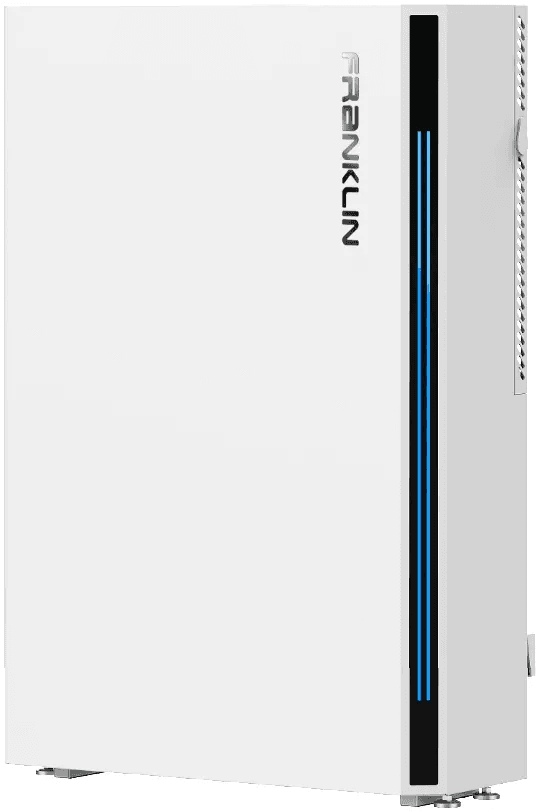
FranklinWH aPower stands out because it is not only selling battery capacity; it is selling control. For many homeowners, backup power is not just about how many kilowatt-hours sit in the battery. It is about what stays on, for how long, and whether the system can prioritize the circuits that matter most. FranklinWH's optional smart panel approach speaks directly to that more thoughtful version of resilience.
The capacity class is also attractive. At 13.6kWh, aPower sits right in the zone many homeowners consider whole-home-capable in spirit, even if actual runtime depends heavily on loads. That makes it comparable enough to category leaders that buyers can treat it as a serious contender rather than an edge-case niche product.
Compatibility is another selling point. Buyers with existing solar equipment often worry that battery adoption will require rebuilding too much of the rest of the system. A product that is generally positioned to work with a range of setups can open the door for retrofit-minded homeowners who want backup without starting over.
What Could Be Better
The smart-panel story is appealing, but it is not free. Adding circuit-level management can push total project cost higher, and not every household needs that level of sophistication. For some buyers, a simpler battery-plus-critical-loads setup will deliver most of the resilience they need without the extra hardware and installation complexity.
FranklinWH is also a newer and less ubiquitous brand than Tesla in many markets. That can affect buyer confidence, resale perception, and in some regions the ease of finding multiple installers who quote the system regularly. In battery storage, installer familiarity is part of product quality whether it is listed on the box or not.
As with all installed batteries, much of the ownership experience comes down to the installer and system design. That means strong product positioning still needs to be matched by local execution, and buyers should not skip quote comparison just because the feature set looks attractive.
Who Is This Best For?
The best fit is a homeowner who wants backup power plus a more active role in how that backup is managed. If your outage priorities are nuanced - perhaps you care about medical equipment, office circuits, refrigeration, internet, and selective cooling more than a generic whole-home label - FranklinWH's control-oriented positioning becomes a meaningful advantage.
It is also a strong option for households comparing multiple installed battery quotes and looking for something in the same general capacity class as Tesla Powerwall 3, but with a different approach to load management. Buyers who value flexibility at the circuit level may find that distinction more important than small differences in capacity on paper.
The weaker fit is someone who wants the most straightforward mainstream choice with the broadest brand recognition. Those buyers may still prefer Tesla simply because it feels more familiar and standardized, even if FranklinWH matches their technical needs well.
Performance & Efficiency
A 13.6kWh battery gives homeowners enough stored energy to cover a serious set of loads when managed intelligently. Essentials-only backup can stretch well beyond short outages, while mixed whole-home loads will shorten runtime but still provide meaningful resilience. The value of FranklinWH comes from combining that capacity with better control over where the energy goes.
Circuit-level prioritization can improve real-world efficiency because it helps prevent the battery from being drained by nonessential loads. In practice, that can be more valuable than small headline differences in raw storage size. A battery that is managed intentionally often feels larger than a battery with similar capacity but weaker load control.
That is where FranklinWH earns its place in the category. It is not just another 13-to-14kWh battery. It is a system aimed at households that want better visibility and decision-making around what remains powered during an outage.
Value for Money
At roughly $11,000 to $16,000 installed, aPower sits in the premium residential battery range, so the value conversation has to include installation design and smart-panel strategy, not just battery chemistry and capacity. Buyers who will genuinely use the load-management features may find that the extra control justifies the added system complexity and possible cost premium.
Compared with Tesla Powerwall 3, FranklinWH often looks like the more control-oriented alternative in a similar capacity class. That can be a real advantage for homes with complicated outage priorities. For simpler households, the extra sophistication may be less compelling and the standardization of a more mainstream option may win out.
Overall, FranklinWH aPower offers strong value when its defining feature - granular backup control - matches what you actually care about. If that feature would materially improve your outage experience, the system has a persuasive case. If not, the right installed quote could still come from a simpler competitor.