Bidirectional charging note
This is a standard Level 2 charger, not a full V2H system
If you are researching whether your EV can power your home during an outage, you are looking for vehicle-to-home hardware and vehicle support, not just a normal wall charger.
Read the V2H guideTime-sensitive credit update
The federal EV charger tax credit ends June 30, 2026
This credit is separate from the expired homeowner solar credit and only applies in eligible census tracts. The charger has to be installed and operational by the deadline.
Read the deadline guideWhat We Like
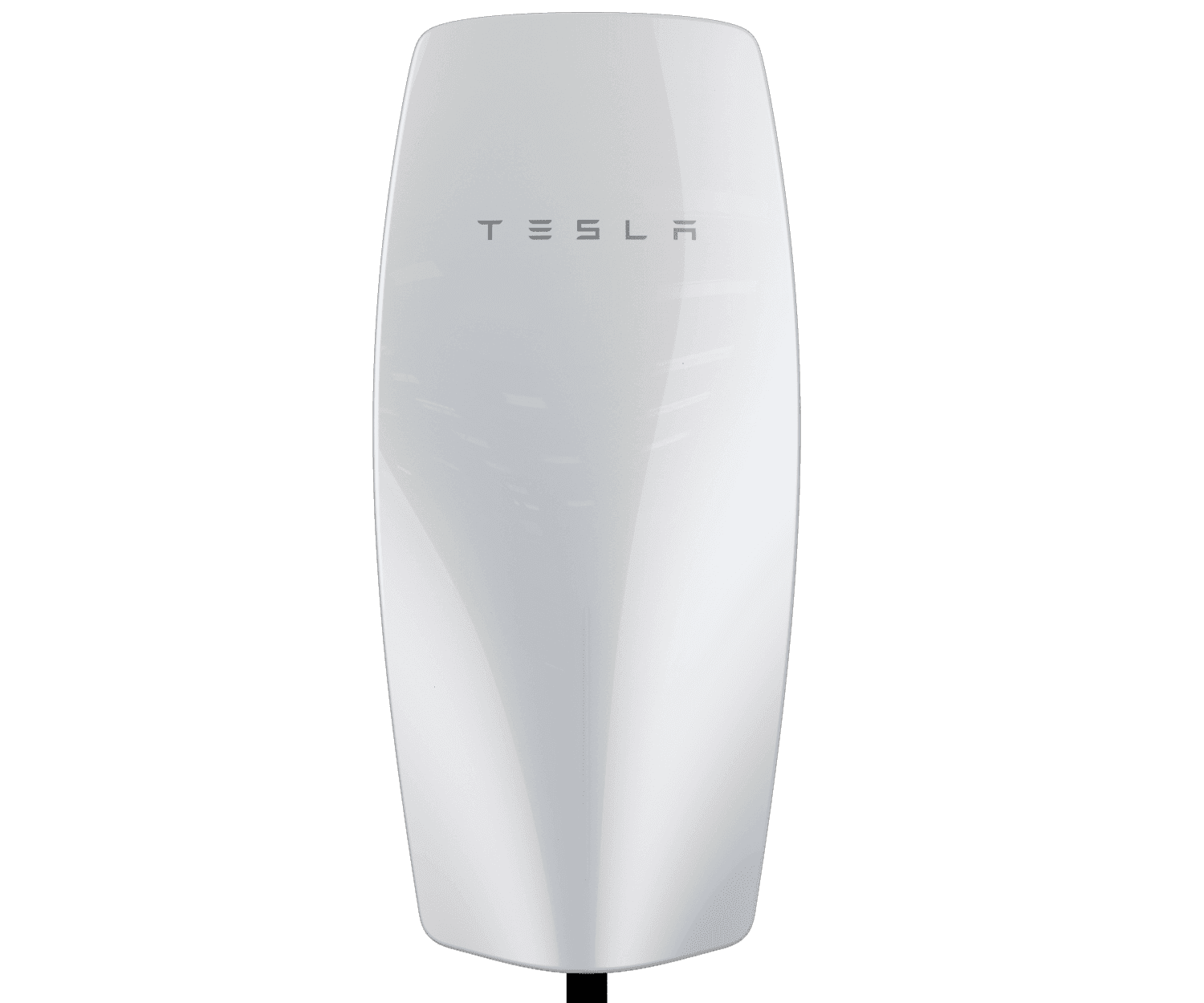
The Tesla Wall Connector has the clearest product-market fit of any charger in this category: it is designed first for Tesla owners, and it feels like it. Native connector compatibility, compact design, and integration with Tesla's broader software ecosystem make it an easy default if your household already lives inside that brand. For buyers who do not want to think too hard about adapters, third-party apps, or cross-brand quirks, that simplicity has real value.
Power-sharing support is a meaningful practical feature for multi-EV households. Homes planning for two Teslas, or a current Tesla plus a future second EV, can benefit from distributing available circuit capacity across multiple chargers instead of overbuilding electrical work for peak simultaneous charging that may rarely happen.
The hardware design is also appealing in a category where many chargers still look like industrial boxes. The Wall Connector feels intentionally residential, which matters more than buyers sometimes admit for a piece of equipment that may be mounted prominently in a garage or on an exterior wall.
What Could Be Better
The main tradeoff is ecosystem specificity. The move toward NACS helps, and adapters broaden compatibility, but the charger is still most intuitive for Tesla-first households. If you drive a non-Tesla today and prefer a no-adapter, no-compatibility-research setup, a J1772 charger can still be the cleaner choice right now.
WiFi and app-based setup add convenience for scheduling and access control, but they also create one more layer that some buyers would rather avoid. A charger that works perfectly well in basic mode can still feel slightly overcomplicated if your ideal ownership experience is simply plug in and charge.
Warranty length is also part of the comparison story. Tesla's charger is attractively priced, but some competitors offer longer or differently structured coverage. Buyers focused on long-term ownership should look beyond price and connector type alone.
Who Is This Best For?
The best fit is straightforward: Tesla owners. If you drive a Tesla and want a charger built around that ownership experience, the Wall Connector is hard to argue against. It matches the car without adapters, aligns with the app experience many owners already use, and generally feels like the charger Tesla drivers would have chosen for themselves if they had designed the category from scratch.
It is also becoming more relevant for mixed-brand buyers who believe NACS will matter more over the next few years. If you are comfortable with adapters in the near term and want to lean into where the market is heading, the Tesla charger becomes more interesting even outside a Tesla-only garage.
The weaker fit is a household with only non-Tesla EVs that wants maximum out-of-the-box compatibility and no connector ambiguity. Those buyers may still be happier with a strong J1772 option like ChargePoint Home Flex.
Performance & Efficiency
At up to 48A, the Wall Connector provides the level of charging speed most homeowners expect from a premium Level 2 installation. In practical terms, that usually means comfortably replenishing daily commuting miles overnight and, for many drivers, recovering a large portion of the battery even after a heavy day of driving. The charger is less about chasing maximum theoretical speed and more about ensuring the car is reliably ready by morning.
Performance also benefits from product fit. A charger that matches the vehicle natively tends to create fewer small frictions in everyday use, and those little frictions matter over years of ownership. Cable handling, connector ergonomics, and software familiarity all contribute to how "fast" and convenient the charging experience feels in practice.
For households with multiple Teslas or future NACS vehicles, power-sharing support also improves system-level efficiency because it helps make better use of existing electrical capacity instead of forcing unnecessarily expensive panel or circuit upgrades.
Value for Money
At roughly $400 to $475, the Tesla Wall Connector is priced aggressively for a charger with this level of brand integration and amperage. For Tesla owners specifically, the value argument is strong because the charger solves the connector question cleanly and does so at a lower price than some premium cross-platform rivals.
Compared with ChargePoint Home Flex, the most important difference is not a small spec edge - it is connector strategy. If your household aligns with Tesla or NACS, the Wall Connector often looks like the simpler and cheaper buy. If your household needs broad J1772 compatibility today, ChargePoint may still justify its higher cost.
Overall, the Wall Connector is a high-value option when your vehicle ecosystem matches its design assumptions. When it does, it is one of the easiest recommendations in the home-charging category.