Time-sensitive credit update
The federal EV charger tax credit ends June 30, 2026
This credit is separate from the expired homeowner solar credit and only applies in eligible census tracts. The charger has to be installed and operational by the deadline.
Read the deadline guideWhat We Like
The Grizzl-E Classic makes a refreshingly simple pitch: dependable Level 2 charging without charging you extra for features you may never use. For homeowners who are tired of app-heavy product categories, that simplicity is a strength. You get a charger focused on the core job, and the lower price can leave more room in the budget for the electrician work that often matters more than charger hardware in the total project cost.
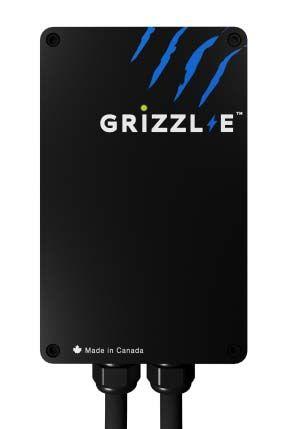
The rugged enclosure is another meaningful advantage. EV chargers live in garages, driveways, exterior walls, and mixed-weather environments, and not every buyer wants something that feels delicate or overly consumer-electronics-like. The Grizzl-E has a reputation for being a straightforward, sturdy piece of equipment that can handle real-world residential use.
Adjustable amperage improves practicality too. Not every home can or should dedicate the same circuit size to EV charging, and a charger that can be set appropriately by the installing electrician is easier to fit into older panels or more constrained electrical setups without forcing a bigger project.
What Could Be Better
The most obvious compromise is the lack of smart features. If you want app-based scheduling, remote start and stop, charging history, energy monitoring, or utility-program integrations, the Classic is intentionally not trying to win that comparison. Some buyers will view that as refreshing; others will experience it as a missing layer of convenience.
Brand awareness is another limitation. Tesla and ChargePoint enjoy stronger mainstream recognition, and that can affect buyer confidence even when the product itself is solid. A less famous charger sometimes has to work harder to prove itself, especially for first-time EV owners who are already juggling installation and vehicle-learning questions.
The no-frills approach also means the value equation depends on your utility rates and habits. If time-of-use electricity pricing would make scheduling especially valuable in your area, skipping smart features could cost more over time than the lower purchase price initially saves.
Who Is This Best For?
The best fit is a homeowner who wants reliable overnight charging at the lowest reasonable hardware cost and does not care much about app polish. If your mindset is "install it once, plug in the car, and stop thinking about it," the Grizzl-E Classic lines up well with that philosophy.
It is also a good option for buyers in colder climates or outdoor-install scenarios who prioritize physical durability. A charger with a robust enclosure and simple operating model can be appealing when daily reliability matters more than software differentiation.
It is less compelling for buyers who expect to monitor charging sessions in detail, automate off-peak schedules through an app, or integrate the charger into a broader smart-home energy stack. Those households are often better served by ChargePoint, Emporia, or Tesla depending on vehicle type.
Performance & Efficiency
At up to 40A, the Grizzl-E Classic delivers meaningful Level 2 performance for most home charging needs. That level is plenty for replenishing a typical daily commute overnight and works well for households that do not need the very fastest residential charging speeds available. In practice, the difference between a solid 40A charger and a slightly faster premium unit is often smaller than buyers imagine for everyday driving patterns.
The efficiency tradeoff here is philosophical as much as electrical. You are trading software-rich charging management for a simpler hardware-first experience. For some households, that is more efficient overall because there is less setup friction, fewer app dependencies, and fewer things to troubleshoot over time.
Adjustable amperage also helps the charger perform efficiently inside real electrical limits. Instead of overreaching the panel and triggering a larger install scope, homeowners can often configure the charger to match available capacity while still getting a very useful overnight charge rate.
Value for Money
At roughly $219 to $279, the Grizzl-E Classic has one of the clearest budget stories in the category. It costs dramatically less than premium smart chargers while still delivering real Level 2 capability. For households where installation is likely to cost as much or more than the charger itself, keeping hardware price under control is a rational move, not just bargain hunting.
Compared with ChargePoint Home Flex, Emporia, and Tesla Wall Connector, the Grizzl-E wins value primarily on upfront simplicity and price. You give up app features and some brand prestige, but if those are not priorities, the cheaper hardware can be the more intelligent purchase.
Overall, the Grizzl-E Classic is a strong value pick for homeowners who want the essential charging outcome without paying for software bells and whistles. It is not the fanciest charger in the category, but it does a good job of focusing value where many buyers actually need it.